
FAQ · Ashland, KY

Ashland Metal Roof Coating Questions

Answers to what building owners ask about coating commercial metal roofs in Ashland, Boyd County, and nearby towns: rust, seams, systems, weather, cost, and permits.

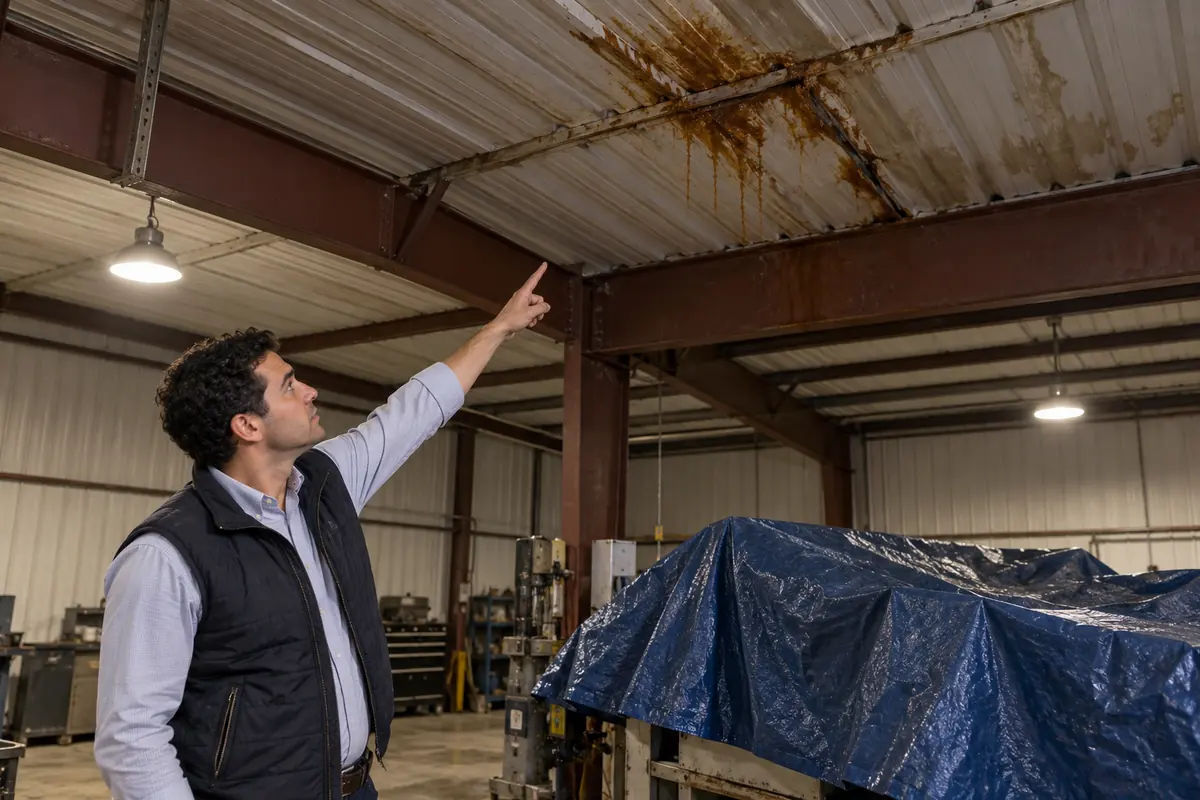
Building manager pointing at rust stains on the underside of a shop’s metal roof
Start Here

Answers To Metal Roof Coating Questions Around Ashland

Metal roof coating is a fluid-applied membrane rolled or sprayed over steel roof panels, fasteners and seams to stop rust, seal leaks and reflect sunlight. Ashland Metal Roof Coating coats commercial metal roofs in Ashland, Boyd County, Kentucky, and nearby towns, and also installs silicone, acrylic, spray foam and shingle roof coatings on commercial, industrial and agricultural buildings.

The Basics

Metal Roof Coating Basics

What does a metal roof coating actually do on a commercial building?

A metal roof coating forms one continuous rubbery skin over the panels, laps and fastener heads so water has no path into the building. On an older warehouse in the Ashland area, that skin covers surface rust, bridges the small gaps at panel side laps and wraps each screw washer.

The coating also changes how the roof handles sun. A light, reflective top coat bounces back much of the solar heat that a bare or faded steel panel soaks up. The Cool Roof Rating Council publishes rated reflectance values for roof coatings, which helps compare products.

Which metal roofs make good candidates for coating?

Steel roofs with surface rust, loose or leaking fasteners and tired paint, but solid panels, are the best candidates for coating. Push on the panels at mid-span; if they flex like normal and the purlins underneath are intact, the deck is ready for prep.

Roofs that score poorly share a few signs:

  • Rust holes you can see daylight through
  • Panels that sag between purlins
  • Wet or crushed insulation under large areas
  • Major structural damage from a fallen limb or equipment

A few rusted-through spots can be cut out and patched with new steel before coating. Widespread rot points toward re-paneling instead.

How is a coating different from simply repainting the metal?

Paint is a thin decorative film, while a roof coating is a thick, elastic membrane built to seal and move with the panels. House paint or barn paint lays down a few mils and cracks once the steel expands on a hot afternoon and shrinks overnight.

Roof coatings go on far heavier and stay flexible. They stretch over the gap at an end lap, bridge a hairline split in old sealant and hold onto the edges of fastener washers. Paint has none of that build, so a painted roof with leaking screws keeps leaking.

Rust And Seams

Rust, Fasteners and Seams

Can you coat over rust on a metal roof?

Yes, surface rust can be coated once loose scale is removed and a rust-inhibiting primer is applied. Crews scrape or wire-brush flaking red rust, then pressure wash so the primer bonds to firm steel rather than powder.

Different rust gets different handling:

Rust conditionWhat it looks likeUsual handling
Light surface rustOrange haze, panel still solidClean, prime, coat
Heavy scaleFlaking layers, pittingGrind or brush, prime twice at worst spots
White rustChalky white bloom on galvanized steelClean and use a primer rated for galvanized metal
Rust-throughHoles along laps or at guttersCut out and patch with new steel first

Rust left loose under the coating keeps spreading, which is why prep matters more than the top coat.

What happens to the screws and washers during a coating job?

Every exposed fastener gets checked, tightened or replaced before any coating goes down. Rubber washers on R-panel screws dry out and crack after years of sun, and that is where many metal roof leaks start.

The usual sequence:

  • Back out stripped or rusted screws and drive oversized replacements.
  • Retighten loose screws so the washer seats flat without crushing.
  • Cover each fastener head with a dab of sealant or a brushed coat of mastic.
  • Roll the field coat over the whole roof so the fastener heads are buried twice.

Screw heads are small, but a roof can have thousands of them, so this step takes real time.

How do you seal panel laps and end laps before coating?

Panel side laps and end laps are cleaned, then covered with reinforcing fabric set in coating or with a compatible seam tape. These overlaps are where panels move against each other, and the old sealant along them has often split or gone missing.

Seam treatment usually covers:

  • Side laps running from eave to ridge
  • End laps where one panel overlaps the next one downslope
  • Ridge cap and hip trim joints
  • Edges around skylight panels and pipe boots
  • Gutter seams and corner joints

With seams and laps reinforced, the field coat has a solid base, and the weakest lines on the roof get the most material.

Is prep different for standing seam and exposed-fastener roofs?

Prep differs because standing seam roofs hide their clips under raised seams while exposed-fastener roofs put every screw on the surface. Each system fails in its own spots, so the crew focuses there.

Prep itemStanding seamExposed-fastener R-panel
FastenersConcealed clips, checked at the seamEvery screw inspected and sealed
Main leak pointsSeam end caps, ridge closures, penetrationsWashers, side laps, end laps
MovementPanels float on clipsPanels pinned at each screw line
Seam treatmentSeal the seam tops and terminationsFabric or tape over laps
Coating volumeLower, flatter fieldHigher, ribs and screw heads add surface

Both types can be coated well once their specific weak points are sealed.

Picking A System

Choosing a Coating

Should a metal roof get silicone, acrylic or urethane coating?

Silicone, acrylic and urethane all work over primed metal, and the right pick comes down to slope, water exposure and foot traffic. Most steel roofs in the Ashland area shed water quickly, which widens the field of good choices.

FactorSiliconeAcrylicUrethane
Standing waterHandles ponding wellSoftens under pondingHandles ponding well
UV and reflectivityStrong, stays lightStrong when kept cleanOften used as a base under a light top coat
Foot trafficSofter surfaceModerateHard, tough surface
Dirt pickupHolds dirt over timeStays cleanerModerate
Recoat laterSilicone over siliconeEasy to recoatRecoat with matching products

Low spots near gutters or at curbs push the choice toward silicone or urethane.

When does silicone roof coating make sense over metal?

Silicone roof coating makes sense when a metal roof has low spots, flat sections or areas where water lingers after a storm. Silicone resists breakdown from standing water and keeps its elasticity through summer sun and winter cold.

Silicone fits roofs like these:

  • Low-slope steel roofs on additions or loading docks
  • Areas behind rooftop units where water backs up against the curb
  • Panels near clogged gutter lines that hold water

The tradeoff is that silicone holds dust and pollen over time, so reflectivity drops between cleanings. Later recoats also call for silicone, since few other coatings stick to it.

When is acrylic roof coating the better choice?

Acrylic roof coating is the better choice for a well-drained metal roof where cost control and a clean, bright surface matter most. Steep R-panel roofs on shops, barns and warehouses drain fast, so acrylic sees little standing water.

Acrylics are water-based, easy to clean up and easy to recoat later with another acrylic. They hold a white surface well because dirt rinses off in rain.

Weather sets limits. Acrylic needs dry hours and mild temperatures to cure, so a rain shower on fresh coating can wash it off the panels. Crews watch the forecast closely and keep acrylic work to warmer, drier stretches.

Can spray foam roofing go over an existing metal roof?

Spray foam roofing can go directly over an existing metal roof, filling the ribs and creating a new insulated surface topped with a protective coating. The foam bonds to cleaned and primed steel, buries the fasteners and turns a corrugated surface into a smooth one.

FactorSpray foam over metalCoating only
Insulation addedYes, a continuous layerNone beyond reflectivity
Roof profileRibs filled, surface reshapedPanel ribs remain
Fastener treatmentBuried under foamSealed individually
Added weightLight, but check the structureVery light
Typical fitBuildings needing heat control or a new slopeSolid panels needing leak and rust control

Foam also lets a crew build up slope toward drains on flat metal sections. A coating then goes over the foam to protect it from sunlight.

Is shingle roof coating an option for commercial buildings?

Shingle roof coating is an option for some commercial asphalt shingle roofs, but only when the shingles are intact and the shingle maker's terms allow it. Offices, churches and strip centers often have shingled sections alongside metal or flat roofs.

Good candidates show:

  • Shingles lying flat with little granule loss
  • Few curled, cracked or missing tabs
  • Solid decking with no soft spots
  • Clean valleys and step flashing

Ask the manufacturer first, since some shingle makers void their coverage once a coating goes on. Curled or brittle shingles need replacement, because a coating only holds as well as the shingle underneath it.

Valley Weather

Weather in the Ohio River Valley

How does Ashland-area weather affect a metal roof coating?

Humid summers, freeze-thaw winters and spring storms all work on a metal roof in the Ashland area, and each one shapes how a coating is chosen and applied. The National Weather Service office in Charleston, West Virginia, covers forecasts and warnings for Boyd, Greenup and Carter counties.

Weather affects coating work in four ways:

  • Heat expands steel panels and pulls on laps and fastener holes.
  • Overnight cold shrinks them back, flexing every seam.
  • Morning dew keeps panels wet until the sun burns it off.
  • Storms bring wind and hail that test edges, ridge caps and skylight panels.

A flexible coating rides out that daily movement better than rigid sealants.

What is the best season for coating a metal roof in Kentucky?

Late spring through early fall gives the most dependable coating days in northeastern Kentucky. Coatings need dry steel, temperatures above the product minimum and no rain during the early cure.

Each season brings tradeoffs:

SeasonCoating conditions
SpringGood temperatures, frequent showers to plan around
SummerLong dry days, hot panels need early starts
FallMild days, heavier dew and shorter afternoons
WinterCold steel and frost limit most products

Repair work such as fastener replacement and seam patches can happen in more months than full coating. Watch the forecast from NWS Charleston before setting a start date.

Will a coating help a metal roof handle hail and wind?

Coating adds a tough, flexible layer that seals small cracks after a storm, though dents in the steel stay. Hail leaves round dents in panels and can crack old washers and skylight panels.

After a strong storm, look for:

  • Dented panels and bent ridge caps
  • Cracked or shattered skylight panels
  • Loose eave trim and gutter straps
  • Popped or backed-out fasteners

Dents that hold water or have split the paint get cleaned and primed before coating. Bent trim and loose edges are refastened first, since wind gets under any loose edge.

Question About Your Own Roof?

Call and describe the building, the roof type, and where water shows up inside, and we will answer for that roof.

On The Job

Prep, Application and Downtime

What are the steps in a metal roof coating job?

Every metal roof coating job runs in a set order: inspect, clean, repair, prime, seal details and apply the field coat. Skipping any step weakens the steps after it.

  • Inspect your roof: fasteners, seams, rust, skylights and gutters.
  • Pressure wash the panels to remove dirt, chalking and loose rust.
  • Replace bad fasteners and patch rusted-through spots with new steel.
  • Prime rusted areas with a rust-inhibiting primer.
  • Reinforce laps, ridge caps, curbs and penetrations.
  • Roll or spray the base and top coats to the specified thickness.

A final walk checks coverage at edges and around each penetration.

Do we have to shut down the building during coating?

Most buildings stay open during metal roof coating because the work happens on the outside of the panels. Tenants, shop crews and offices usually keep working inside.

Plan around a few things:

  • Odor from solvent-based primers drifting into air intakes
  • Rooftop units that need shutdown while crews coat around their curbs
  • Overspray risk to parked vehicles near the eaves
  • Ladder and lift access near entries and loading docks

Water-based acrylics carry little odor. Spray work calls for wind checks and covers on anything nearby. Agree on access points and work hours before crews arrive.

How long does a metal roof coating take to cure?

Cure time depends on the product, temperature and humidity, and most coatings need several dry hours before rain and a full day or more before heavy traffic. Silicone sets quickly in humid air, while acrylic dries by evaporation and slows down on damp, cool days.

Crews time each coat so the panels stay dry through the first stage of cure. In the Ohio River valley, heavy morning dew pushes start times later in spring and fall.

Keep foot traffic off fresh coating, and hold off on rooftop unit service until the coating firms up around the curbs.

Money Matters

Cost, Value and Taxes

What affects the cost of coating a commercial metal roof?

Roof size, rust level, fastener count and the coating type are the biggest cost drivers on a commercial metal roof. A clean, solid roof with light rust costs less per square foot than a roof with heavy scale and failed laps.

Other cost drivers:

  • Number of skylight panels, curbs and pipe penetrations
  • Roof height, pitch and how crews reach it
  • Panel replacement needed at gutters or end laps
  • Spray foam thickness when insulation is added
  • Product choice and the number of coats

A detailed roof inspection shows which of these apply before any work is scheduled.

Should we coat, restore, re-panel or replace our metal roof?

Coating fits solid panels with surface wear, while widespread rust-through or structural damage calls for re-paneling or full replacement. The panel condition you see on the roof decides the path.

OptionPanel conditionMain workDisruption
CoatSolid, light rust, worn washersClean, seal, coatLow
RestoreMixed rust, failed laps, some bad panelsPanel patches plus full coating systemLow to moderate
Re-panelRust-through across large areasRemove and replace panelsModerate to high
ReplaceDamaged structure or insulationNew roof systemHigh

Restoration adds panel repairs and heavier seam work to a coating. It often extends the life of a roof that is close to the re-panel point.

Can a metal roof coating qualify for Section 179 tax treatment?

Section 179 can apply to roofs on existing nonresidential buildings, which includes many metal roof coating and restoration projects. IRS Publication 946 lists roofs among qualifying improvements to nonresidential real property placed in service after the building itself.

For tax years beginning in 2026, the Section 179 limit is $2,560,000, reduced once qualifying property placed in service tops $4,090,000. Residential rental property falls outside this treatment.

Keep invoices that separate coating, panel work and fastener replacement. Talk with your CPA about whether to expense the project or depreciate it.

Permits

Permits, Codes and Utilities

Do I need a permit to coat a metal roof in Boyd, Greenup or Carter County?

Permit rules depend on where the building sits and the scope of the work, so call the local office before re-paneling, replacing a roof or adding spray foam. Coating alone over existing panels is often treated differently from a full roof replacement.

LocationWho to contact first
AshlandCity building inspection, Community and Economic Development
CatlettsburgLocal building inspector who also covers Ashland
Unincorporated Boyd CountyBoyd County commercial building permit contact
Russell, Flatwoods, Raceland, GreenupCity office where the work happens, or the Greenup County Judge Executive
Grayson and Carter CountyKentucky Department of Housing, Buildings and Construction for commercial work

Rooftop curbs, new skylight panels and structural repairs are the usual triggers for inspection.

Who supplies power to commercial buildings around Ashland?

Kentucky Power, an AEP company, serves much of the Ashland area, and rural electric cooperatives serve other parts of the region. Grayson Rural Electric Cooperative Corporation, an owner-member of East Kentucky Power Cooperative, serves customers in Carter County and nearby areas.

Your electric bill shows the provider. That matters for two reasons:

  • Rooftop unit disconnects need the right contact if a shutdown is planned.
  • Efficiency programs, when offered, come from your utility.

A reflective coating can lower roof surface heat, but any utility program or rebate has its own rules. Check with the provider before counting on one.

By Town

Questions by Town

Does the Ashland floodwall affect roof drainage planning?

Ashland's floodwall protects the riverfront district, and roofs inside it still depend on clear gutters, downspouts and scuppers to move storm water off the building. The city's Floodwall Division maintains over three miles of concrete wall, earthen levees on the west end and six pump stations.

A coating seals the roof surface, but drainage starts at the eave:

  • Clear packed leaves from gutters before washing.
  • Reseal leaking gutter seams and end caps.
  • Confirm downspouts drain away from the foundation.

During high water, city crews close floodgates. Roofs with blocked gutters overflow onto walls and entries, so drainage checks belong in every Ashland coating job.

Who handles building inspections inside Ashland city limits?

The City of Ashland runs building permits and inspections through its Community and Economic Development department, with building inspection handled under code enforcement. Commercial roof work inside city limits starts there.

Coating over existing panels is a lighter scope than re-paneling, but call before the job if the work includes:

  • Replacing large sections of panels or purlins
  • Adding spray foam that changes roof weight or edge height
  • New skylight panels or relocated rooftop curbs

The state Department of Housing, Buildings and Construction's Boyd County contact sheet lists a local building inspector for the City of Ashland. Confirm the current contact with the city before scheduling.

What should Catlettsburg building owners know about river moisture and coating?

Catlettsburg sits where the Big Sandy River meets the Ohio, and two rivers bring humid air and long dew mornings that shape coating schedules. Wet steel blocks primer bond, so crews wait until panels are dry to the touch.

For Catlettsburg roofs, plan for:

  • Later start times in spring and fall
  • Extra checks for white rust on galvanized ridge caps and trim
  • Primer on any panel edges showing red rust at the eaves

Humidity also speeds silicone cure, which helps on days when rain is forecast for late afternoon. Acrylic needs more drying time, so it fits the drier summer stretch.

Who inspects commercial roof work in Catlettsburg?

The local building inspector for Catlettsburg is the same one listed for Ashland on the state's Boyd County contact sheet. That sheet also notes Boyd County has no county building inspector of its own.

Catlettsburg is the Boyd County seat, yet the inspector listing ties it to the Ashland office. For roof work there:

  • Call the local building inspector listed for Ashland and Catlettsburg.
  • Describe the scope: coating only, panel replacement or spray foam.
  • Ask whether structural repairs to purlins or curbs need plans.

Buildings outside both city limits fall under Boyd County's commercial permit contact for new buildings and remodeling.

Do Russell businesses get permits from the city or Greenup County?

Russell sits in Greenup County, and the state's Greenup County contact sheet directs building questions to the city office where work happens or to the County Judge Executive. Start with Russell's city office for commercial roof work inside city limits.

Have these details ready:

  • Building address and use
  • Roof type, such as R-panel or standing seam
  • Scope, from fastener replacement to full re-paneling
  • Whether new skylight panels or rooftop curbs are planned

Greenup County also lists a local building inspector. If the city office points elsewhere, that inspector or the state Department of Housing, Buildings and Construction is the next call.

How do river winds affect metal roofs along Russell's riverfront?

Open Ohio River frontage lines Russell, and wind crossing the water hits eave trim, rake trim and ridge caps first on riverfront buildings. Edges and corners take the highest uplift on any metal roof.

Before coating a Russell building near the river, check:

  • Rake and eave trim for loose or missing screws
  • Ridge cap laps for lifted edges
  • Gutter straps and hangers for rust
  • Corner panels for bent ribs or popped fasteners

Coating over a loose trim piece seals it in a loose position. Refasten edges first, then coat across them so wind meets a sealed, tight edge.

Does Flatwoods zoning matter for a roof coating job?

Flatwoods maintains its own zoning information, and zoning matters most when roof work changes a building's height, footprint or rooftop equipment. Coating existing panels leaves the building's size alone.

Zoning questions come up when a Flatwoods project includes:

  • Spray foam thick enough to raise the roof edge
  • New rooftop units or screen walls
  • Additions with their own roof
  • Changes to signs mounted on parapets or fascia

Building permits and zoning are separate questions. Greenup County guidance sends building questions to the city office, and Flatwoods city hall can say whether zoning applies to the scope.

Can a Flatwoods office or church with shingles get coated?

A Flatwoods office, church or small retail building with asphalt shingles can be coated when the shingles are flat, intact and covered by a maker that allows it. Many buildings like these mix a shingled main roof with a metal canopy or porch roof.

Check before choosing shingle coating:

CheckPassFail
Shingle shapeFlat tabsCurling or cupping
GranulesMost still in placeBare spots, gutter full of grit
DeckingFirm underfootSoft spots
Manufacturer termsCoating allowedCoating voids coverage

The metal canopy and the shingle roof can each get their own coating system in one visit.

What should Raceland church and school gym owners check on metal roofs?

Large metal roofs on church fellowship halls and gyms in Raceland often have long panel runs, skylight panels and end laps that leak first. Long spans mean more expansion, which loosens fasteners and opens laps faster than on a short roof.

Inspection points for big Raceland roofs:

  • End laps across the middle of long panel runs
  • Skylight panels yellowed, cracked or leaking at the edges
  • Ridge vents clogged or with loose closures
  • Interior ceiling stains under laps

Gyms and halls with events need a work schedule that keeps entries clear. Crews can stage the job by roof section so the building stays usable.

What should Raceland owners do after a hail warning?

After the National Weather Service in Charleston issues a severe thunderstorm warning with hail for Greenup County, Raceland owners should walk the building and look for roof damage within a few days. Fresh damage is easier to document and repair.

Walk-around checklist:

  • Dents on panels, gutters and downspouts
  • Cracked skylight panels or vent caps
  • Popped fasteners and torn washers
  • Granules in gutters on any shingled section

Photograph damage with a date stamp. Insurance and repair decisions come before coating, since dented panels often need replacement while minor marks can be primed and coated.

Who handles building inspections in and around Greenup?

Greenup is the Greenup County seat, and the state's Greenup County contact sheet lists a local building inspector for county work. Buildings inside Greenup city limits start with the city office, per that sheet.

For a commercial or agricultural building outside town, call the county's local building inspector when the work includes:

  • Panel replacement over a large area
  • Structural repairs to purlins or trusses
  • Spray foam that adds weight or changes edge height

The state building inspector listed for Greenup County handles questions the local office refers. Coating-only work on solid panels is the simplest scope to describe.

Are farm shops and equipment sheds near Greenup good candidates for coating?

Farm shops, equipment sheds and agricultural buildings around Greenup with exposed-fastener R-panel roofs are frequent coating candidates once rust and fastener issues are fixed. Valley moisture near the Little Sandy and Ohio rivers keeps these roofs damp for long stretches, which wears out washers and starts rust at laps.

Ag buildings bring their own concerns:

  • Condensation under bare panels drips on stored equipment.
  • Open eaves let birds nest against the purlins.
  • Barn doors and lean-to roofs leak at their tie-in flashing.

A reflective coating cuts panel heat on summer days. Spray foam over the panels also cuts condensation, since insulated steel stays closer to indoor temperature.

Who issues commercial building permits in Grayson?

Commercial construction permits in Grayson and Carter County go through the Kentucky Department of Housing, Buildings and Construction, according to the state's Carter County contact sheet. A local building inspector covers Carter County and Grayson but excludes Olive Hill.

For a Grayson building, call the state department when a roof project includes:

  • Full re-paneling or roof replacement
  • Structural repairs
  • Spray foam that alters roof assembly or height

Coating-only work over solid panels is a lighter scope, but ask the department how it classifies the job. Write down the date and the name of whoever answers.

Does Grayson's electric cooperative matter for a roof coating project?

Grayson Rural Electric Cooperative Corporation shares the town's name and serves many rural buildings in the area, while other Grayson-area buildings are on Kentucky Power. The provider matters when rooftop units need to be shut down or reconnected.

Before coating, sort out:

  • Which utility serves the meter
  • Who turns off rooftop unit power for curb work
  • Whether the provider offers any efficiency programs

Ask the utility directly about programs, since the roofer has no say over them. A white coating lowers roof surface temperature on hot days, which helps rooftop units in summer.

First Step

Getting Started

How do I start a metal roof coating project?

Start with a roof inspection that records panel condition, fastener wear, seam failures, rust level and drainage at gutters and curbs. Those findings decide between coating, restoration, re-paneling and spray foam.

Gather this before the inspection:

  • Roof age and any past repairs
  • Leak locations and ceiling stains inside
  • Rooftop unit and skylight panel counts
  • Access points, lifts or ladders on site
  • Building hours and areas that need to stay open

From there, the crew lays out the work order and timing. Weather windows set the start date, and prep starts with fasteners and laps.

Still Have A Question About Your Roof?

Call us or get a free estimate, and we will answer it for your building.

Call Us (606) 221-5158