
Ashland Silicone Roof Coating
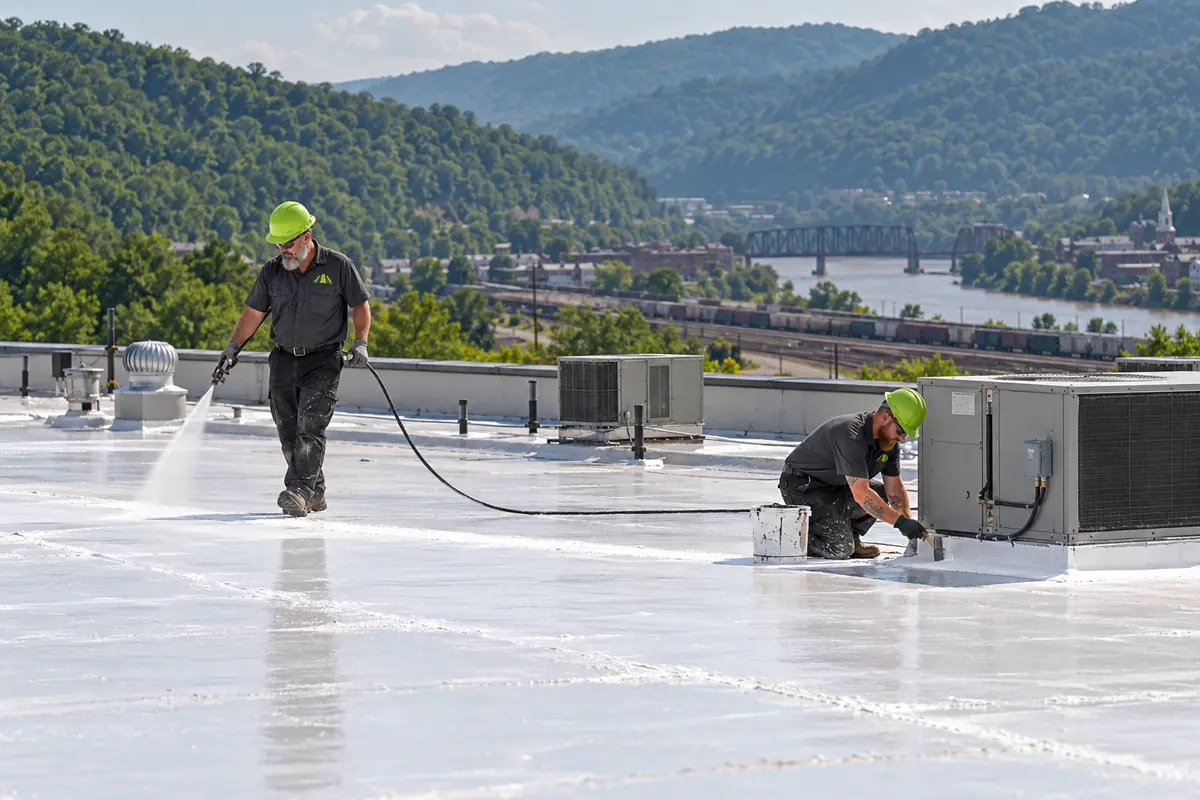
We apply silicone roof coating in Ashland on low-slope metal, flat additions, and dock roofs where water sits after a storm, and on curbs where it backs up.
Built for water that lingers
Curbs sealed on the upslope side
Fast set in humid air
Recoats stay silicone
Is This Roof A Fit?
Silicone earns its place where a roof holds water. These are the cases we see most on Ashland-area buildings.
- If Your Roof
Holds Water Behind Rooftop Units
Puddles on the upslope side of a curb a day after rain are a silicone job once the flashing is sealed.
Start WithSilicone At The Curbs - If Your Roof
Has A Low-Slope Addition Or Dock Roof
Flatter sections tied into a steeper metal roof get silicone while the steep panels take another system.
Start WithMixed System - If Your Roof
Ponds Near A Clogged Gutter Line
Leaves come out first, and panels that still hold water at the eave get silicone.
Start WithClear, Then Silicone - If Your Roof
Sits Over Wet Insulation
Soaked insulation under a low roof has to be cut out and replaced before any coating seals it in.
Start WithReplace Wet Areas
What Ponding Does To A Low Roof
Water that stays on a roof finds every weak lap. These pairs show where it turns up inside and what causes it.
Rings Of Dirt On The Roof
Inside The BuildingStains appear on the ceiling a day or two after a storm, long after the rain has stopped.
On The RoofWater stands in shallow low spots for days and works into laps. Silicone resists that standing water where an acrylic coat would soften.
Drips Around The Unit
Inside The BuildingCeiling tile under the rooftop unit browns first, then the stain spreads along the supply line.
On The RoofWater dams on the upslope side of the curb and pushes into the flashing seams. Curbs get reinforced with fabric before the silicone coat.
Slow Drains On Flat Sections
Inside The BuildingDrops fall near columns or interior walls where a roof drain sits overhead.
On The RoofDrains and scuppers on the flat section are partly blocked by debris. They are cleared and their edges sealed so water leaves the roof.
Water Held At The Eave
Inside The BuildingThe wall below the gutter shows streaks, and the soffit stays damp.
On The RoofA clogged gutter line backs water onto the last few feet of panel. Leaves come out, gutter seams are resealed, and those panels get silicone.
Old Coating Peeling In Puddles
Inside The BuildingFlakes of an old roof coating wash into gutters and collect at downspout outlets.
On The RoofAn earlier coating softened under standing water. Loose material is removed and adhesion is tested before any silicone goes on.
Commercial Roof Coating Options for Ashland
Silicone is one of three ways to coat a low or flat section around Ashland. The roof under it decides the system around it.
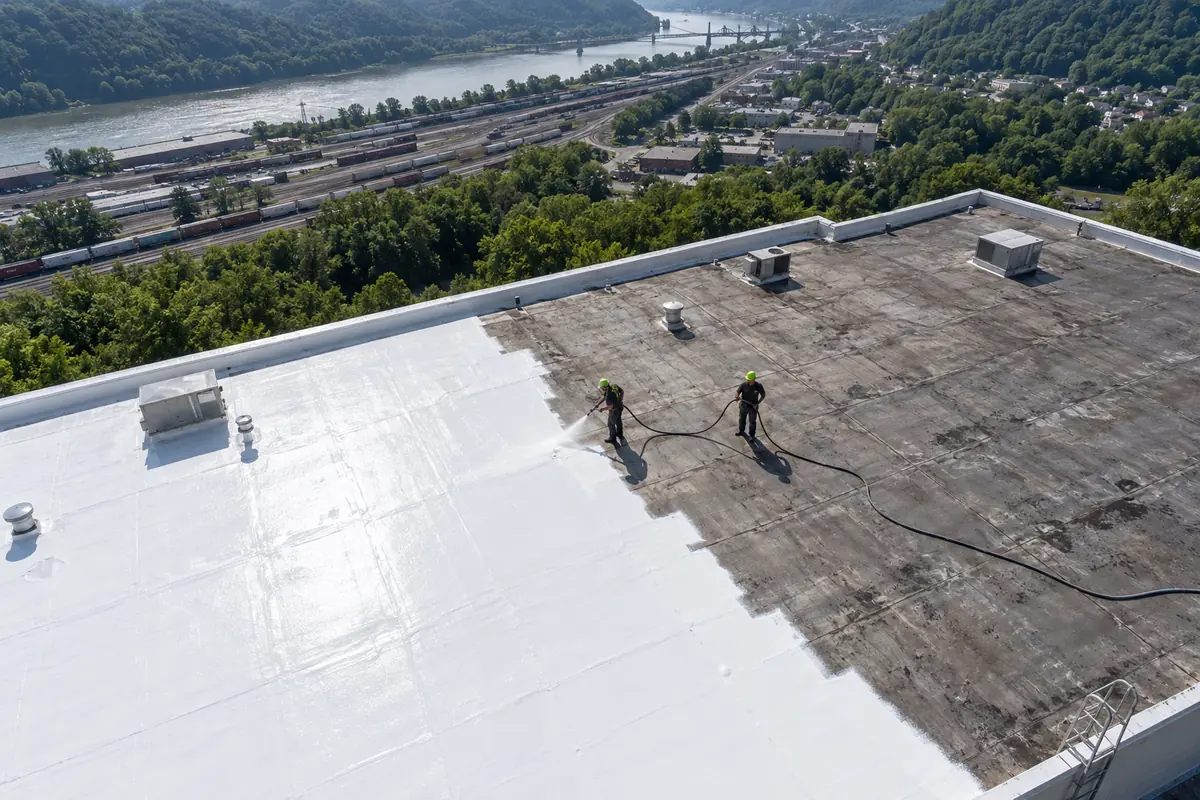
Silicone Over Low-Slope Metal
Low-pitch metal on additions and dock roofs is primed and coated in silicone across the whole section. Fasteners and laps are detailed first, the same as on steeper panels.
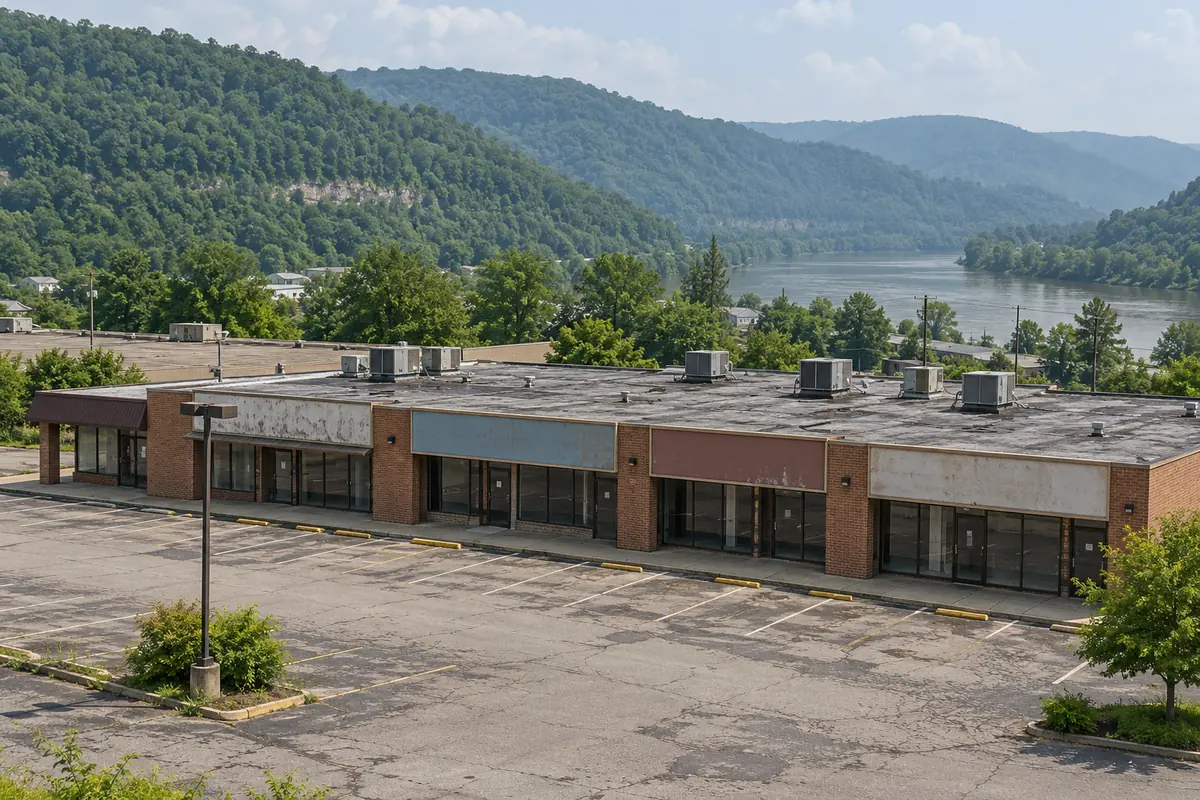
Silicone On Flat Retail Roofs
Flat roofs over shops and offices, often crowded with units and curbs, take silicone where water stands. Adhesion is checked on the existing surface before the full coat.
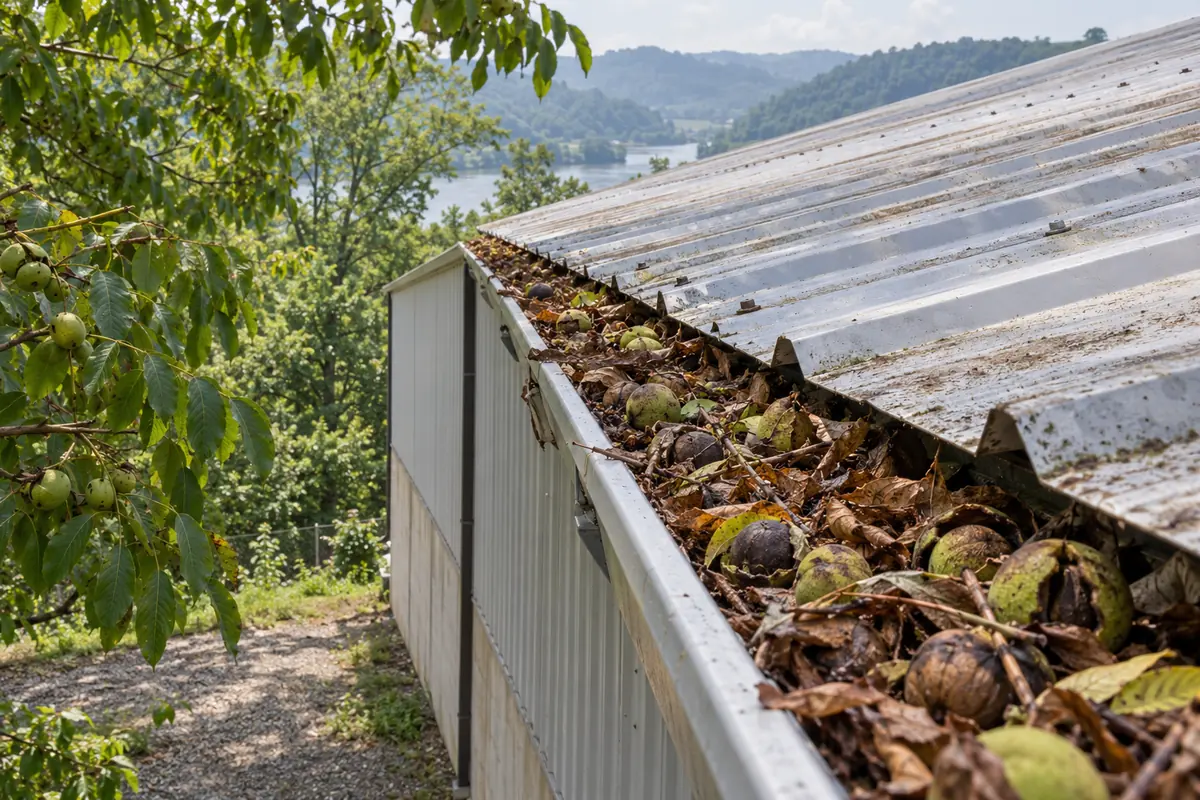
Eave Sections Above Problem Gutters
Where a gutter line keeps water on the panels, the last few feet of roof get silicone, and the rest of a steep roof can take acrylic.
Acrylic for the steep panels
Benefits of Coating Your Roof
Silicone suits roofs where water lingers. These gains apply once drains are clear and the surface underneath is dry.
Holds Up Under Standing Water
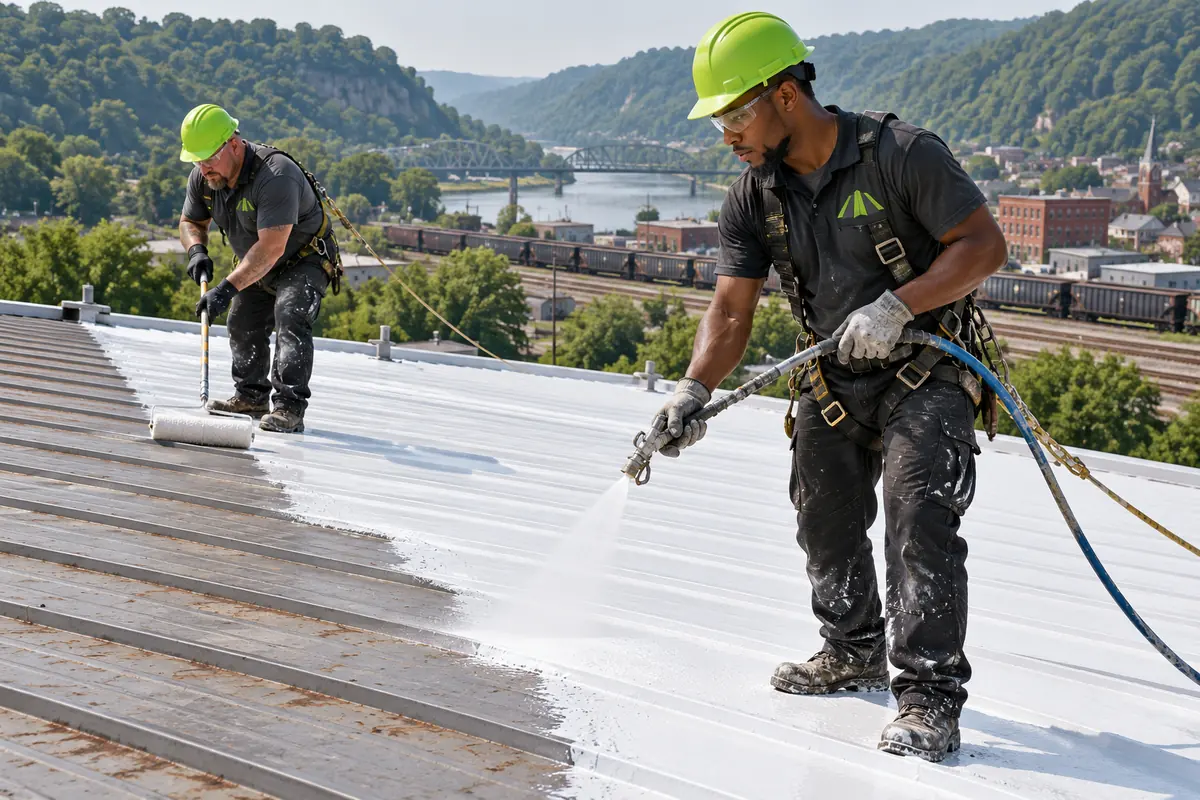
Silicone resists breakdown from water that sits for days, which is why it goes on low spots and the upslope side of curbs.
Stays Flexible Summer To Winter
The coat keeps its stretch through hot afternoons and freezing nights, so laps can move without cracking the surface.
Sets Quickly On Humid Days
Moisture in the air cures silicone, which helps when Ohio River valley humidity runs high and rain is due later in the day.
Avoids A Low-Roof Tear-Off
Coating a dry, solid section skips removal and disposal of the old roof, which keeps the building open while crews work.
Water Still Sitting Two Days After Rain?
Call and tell us where it collects: behind a unit, at a gutter line, or on a flat addition. Each one needs a different fix before silicone goes on.
How A Silicone Coating Goes On
Silicone work leans on drying, cleaning, and adhesion checks, because the coat holds only as well as the surface below it.
Inspect Your Roof
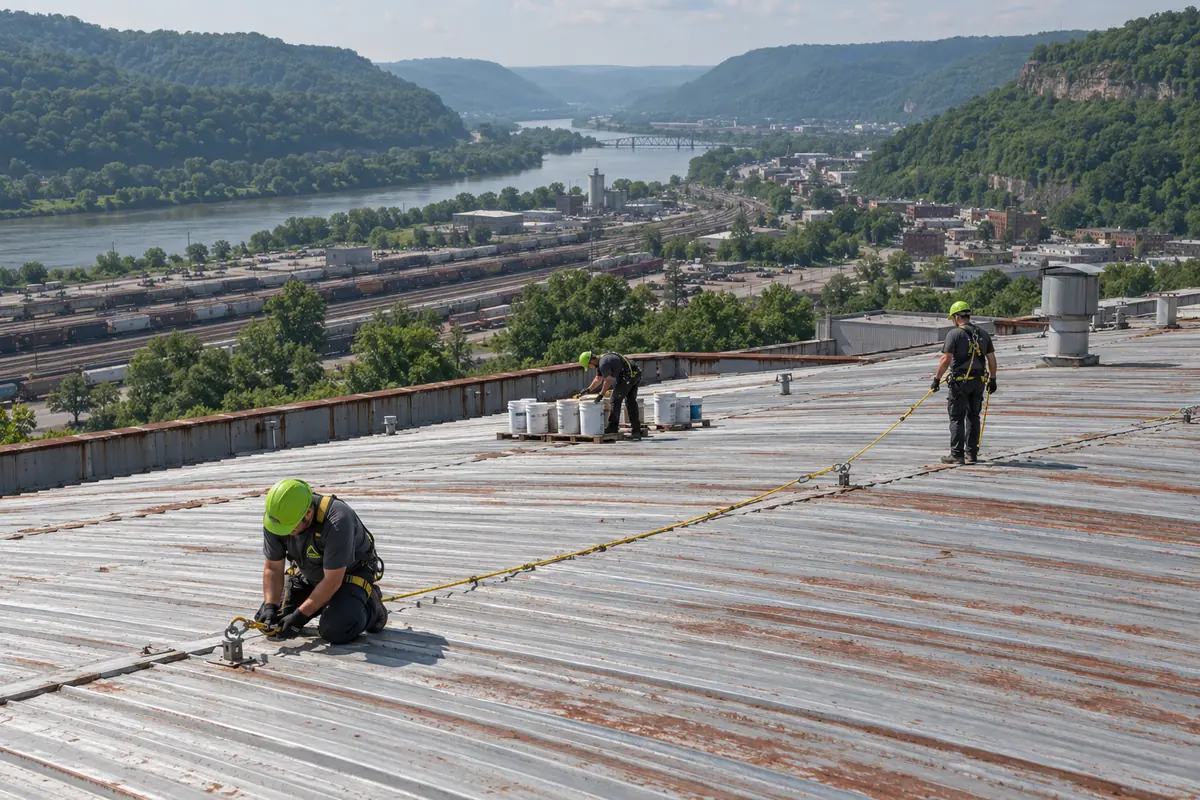
On The RoofWe mark where water stands, take moisture readings in those areas, and check the drains, curbs, and gutter lines that feed the low spots.

Remove Wet Or Loose Material
On The RoofWet insulation found by the readings is cut out and replaced, and loose old coating is scraped back to a firm edge.
Clean And Test Adhesion
On The RoofThe surface is washed and left to dry, then small test patches confirm the silicone grips before the whole section is coated.
Shut Down Units Near The Work
At The BuildingRooftop units beside the curbs being coated are switched off with your maintenance contact, so fumes stay out of the intakes.
Apply And Check Thickness
On The RoofPrimer goes on where the surface calls for it, then silicone is rolled or sprayed to the specified thickness and checked with a gauge.
Systems That Pair With Silicone
Most buildings with a silicone section have other roof areas that need something else.
Metal Roof Coating
Steep metal panels around the low section take metal roof coating in Ashland with rust primer and lap work.
Acrylic Roof Coating
Well-drained roofs that never pond suit acrylic roof coating, which recoats easily and stays bright.
Spray Foam Roofing
Flat areas that need new slope toward drains can be built up with spray foam roofing.
Shingle Roof Coating
Shingled sections beside a flat roof get their own check for shingle roof coating.
Silicone Coating, Plainly Answered
What owners ask before choosing silicone for a low or flat roof in the Ashland area.
- Choosing It
When Does Silicone Make Sense Over Metal?
When a metal roof has low spots, flat sections, or areas where water lingers after storms. Silicone resists standing water and stays elastic through summer sun and winter cold. The tradeoff is dirt: it holds dust and pollen, so brightness drops between cleanings, and recoats must also be silicone.
Can Silicone Go Over An Old Acrylic Coating?
Sometimes, after the old coating is checked for adhesion and loose areas are removed. A small test patch shows whether the silicone grips. Going the other way is the problem: very few coatings stick to silicone, so a silicone roof stays silicone at every recoat.
- Weather And Cure
How Long Does Silicone Take To Cure?
It depends on the product, temperature, and humidity. Silicone sets quickly in humid air, so it often needs only several dry hours before rain and a day or more before foot traffic. In spring and fall, heavy morning dew pushes start times later until the panels dry.
Does Dew Or Fog Delay The Work?
Yes. Wet panels block bonding, so crews wait until the steel is dry to the touch, which along the Ohio River can mean a late-morning start in spring and fall. Once the coat is on, humidity helps silicone set.
- Upkeep
Why Does A Silicone Roof Look Gray Over Time?
Silicone surfaces hold airborne dust and pollen, so a bright white roof dulls between cleanings and reflects less sun. A gentle wash restores much of the brightness, and the coating underneath keeps sealing the roof as it dulls.
What Does A Silicone Recoat Involve?
Cleaning, a check for thin or damaged spots, repairs at curbs and laps, and a fresh coat of silicone, since few other coatings stick to it. Recoating a sound silicone roof takes far less work than the first application.
Stop The Water Sitting On Your Low Roof
Get a free estimate for silicone on the sections that hold water, and a plan for the rest of the roof.